

What Homeowners Should Know About WPC vs. SPC Flooring
Luxury vinyl flooring has come a long way in the last few years. Performance expectations are higher, design has improved dramatically, and homeowners are paying closer attention to what’s actually beneath the surface. One of the biggest questions continuing to come up across renovations and new builds alike: WPC or SPC?
Client Mohawk Flooring recently helped break down the differences between the two constructions through examples available at The Home Depot, offering a clearer look at how each option functions in everyday spaces.
WPC, or wood plastic composite flooring, is typically known for comfort underfoot. It has a slightly softer feel, better sound absorption, and works especially well in bedrooms, living spaces, and homes where warmth and comfort matter just as much as durability. Products like Karastan LuxeCraft Serenity reflect that direction, combining layered visuals with a quieter, more cushioned experience.
SPC, or stone plastic composite flooring, leans more rigid and dense. It’s built to handle heavier traffic, active households, pets, and spaces where moisture resistance becomes a bigger factor. Collections like Mohawk SolidTech continue gaining traction for kitchens, bathrooms, basements, and open-plan homes where durability is often the priority.
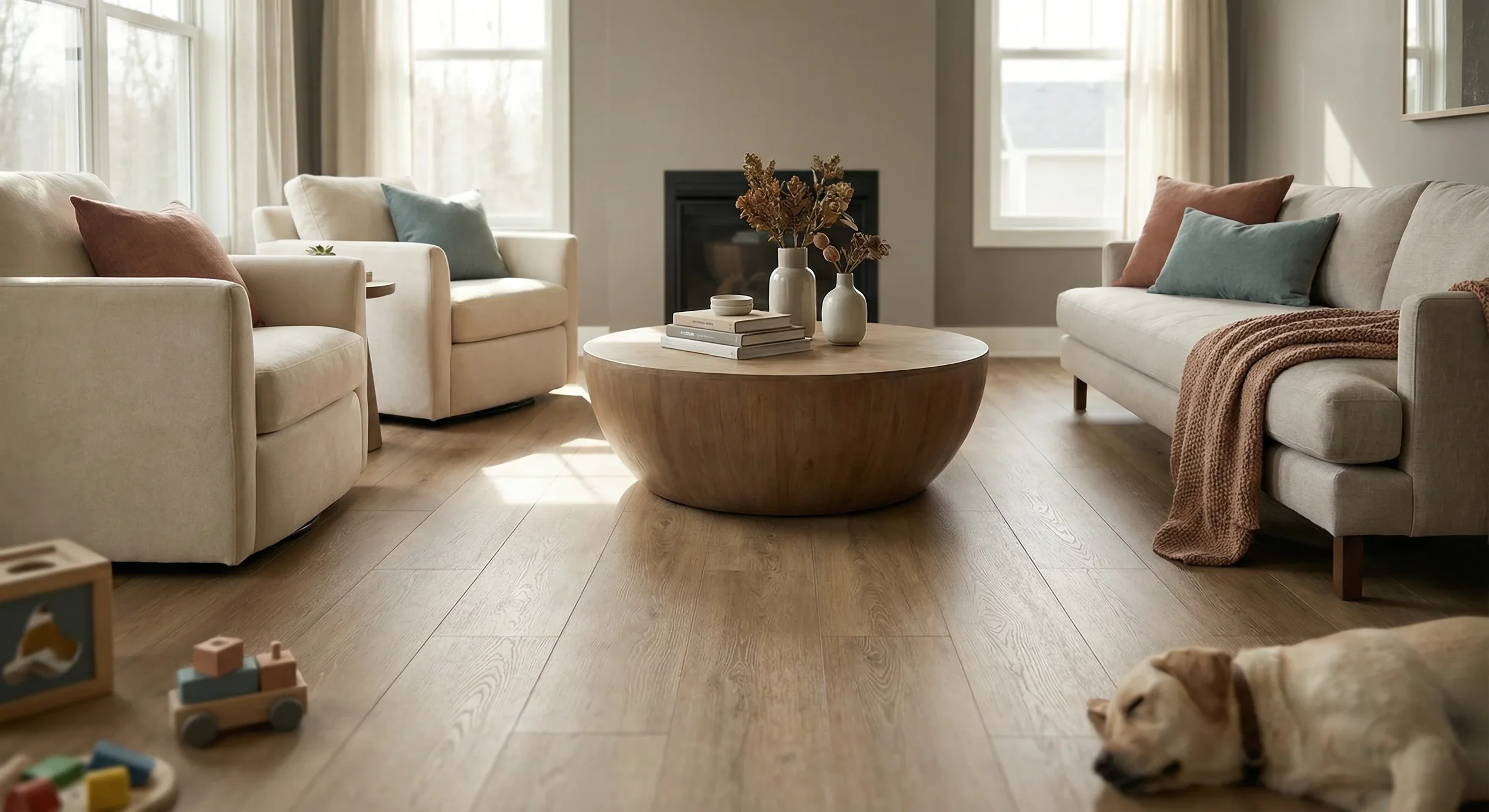
The distinction matters because flooring decisions have become less about choosing a single “best” material and more about matching construction to lifestyle. A quieter upstairs bedroom may benefit from the softer feel of WPC, while a busy family kitchen may call for the structure and stability SPC offers.
There’s also been a noticeable shift in how homeowners shop for flooring overall. Performance is expected. Design is what increasingly drives the decision. Embossed textures, matte finishes, realistic wood visuals, and seamless transitions between rooms have pushed luxury vinyl into a much more design-conscious category than it occupied even a few years ago.
Retailers like Home Depot have helped make those comparisons easier for consumers, while manufacturers continue investing in formats that balance practicality with aesthetics.
For homeowners navigating renovations, the takeaway is fairly simple: the right flooring choice depends less on trends and more on how a space is actually used day to day.