

Workspaces are changing quickly, and the products that fill them are evolving just as fast. Flexibility, durability, and sustainability are no longer nice to have, they’re expected. The Little Perillo Eco chair by Dauphin sits right at the intersection of those priorities.
Designed for contract environments, the chair brings together a compact footprint with a more responsible material approach. It’s lightweight, stackable, and adaptable across a range of settings, from collaborative office spaces to hospitality and education environments.
What makes the Little Perillo Eco chair stand out is its focus on materiality. The shell is made from recycled polypropylene, aligning with a broader push across the industry toward lower-impact production and longer product lifecycles. As more projects prioritize sustainability benchmarks, pieces like this are becoming a natural fit within the specification process.
At the same time, the design doesn’t feel overly technical or utilitarian. The silhouette is clean and slightly playful, with a curved form that adds softness to more structured environments. It’s the kind of chair that works across multiple applications without needing to be rethought each time.
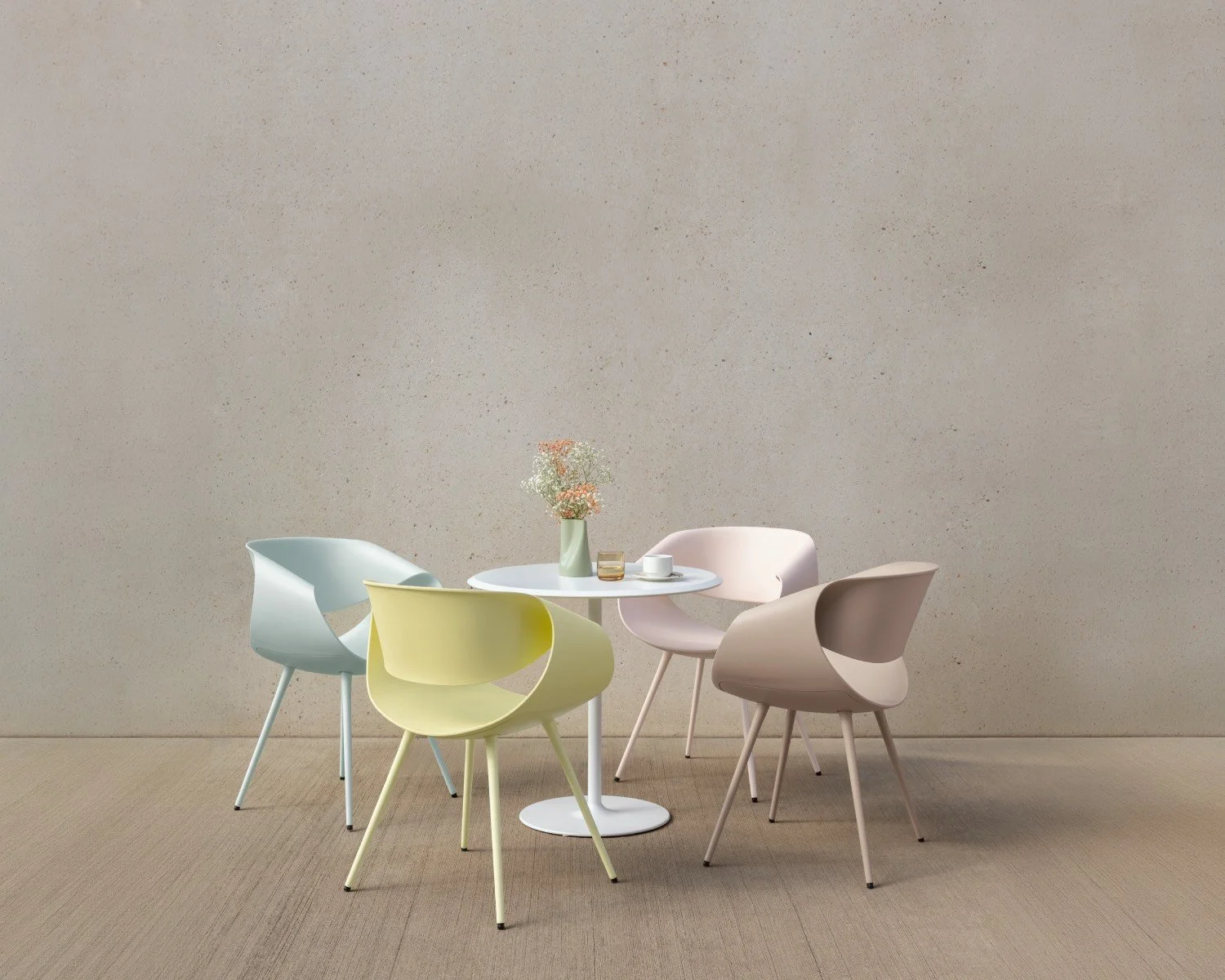
There’s also a clear emphasis on mobility and space efficiency. The chair is easy to move, easy to stack, and easy to integrate into layouts that need to shift throughout the day. In spaces where use is constantly changing, that kind of flexibility becomes essential.
Dauphin has long focused on ergonomic and forward-thinking seating solutions, and the Little Perillo Eco chair continues that direction with a more conscious material story. It reflects a growing expectation that design should not only perform well but also consider its impact over time.
As workplaces, hospitality settings, and public environments continue to adapt, seating is playing a more active role in how those spaces function. The Little Perillo Eco chair responds to that shift with a balance of sustainability, versatility, and design clarity that feels aligned with where the industry is heading.