

Polka Dots Are Back.
Polka dots are showing up everywhere again, but the latest version feels far removed from the playful prints many people associate with the pattern.
Across interiors, designers are leaning into dots in a way that feels softer, more graphic, and surprisingly versatile. The shift lines up with a broader move away from ultra-minimal spaces and toward rooms with more personality, layering, and visual rhythm. Publications like Livingetc and Better Homes & Gardens have both pointed to the return of polka dots across interiors, fashion, and decorative surfaces.
Client Fancy Walls has been leaning into the trend through its growing collection of dotted and polka dot wallpapers, offering designs that range from subtle tonal repeats to larger-scale graphic patterns designed to anchor a room visually.
Rather than reading overly themed or juvenile, today’s dotted wallpapers feel cleaner and more intentional. Scale plays a major role. Smaller, tightly repeated dots can almost function like texture from a distance, while oversized patterns create movement and geometry across a wall. In many spaces, the pattern works less like decoration and more like structure.

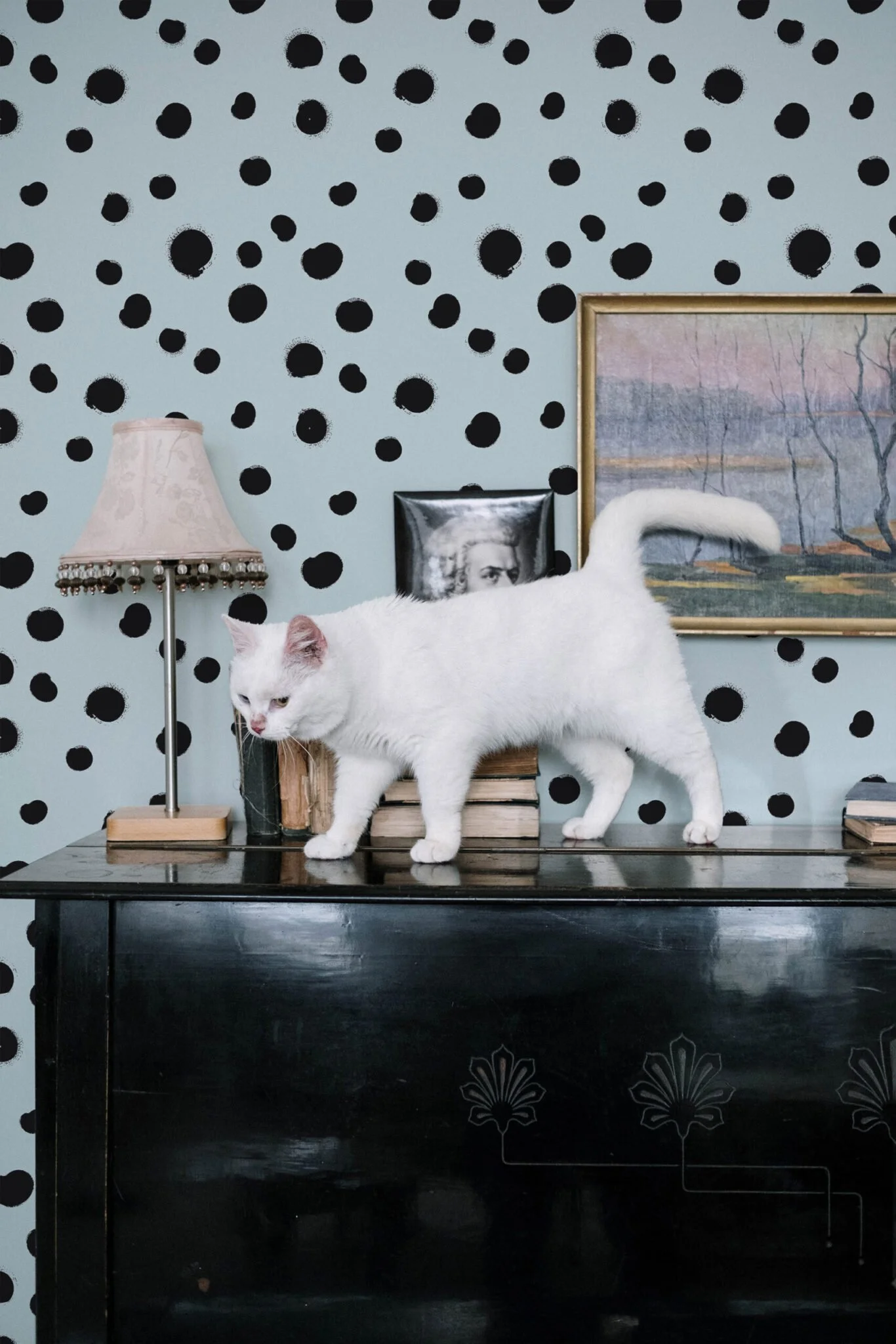
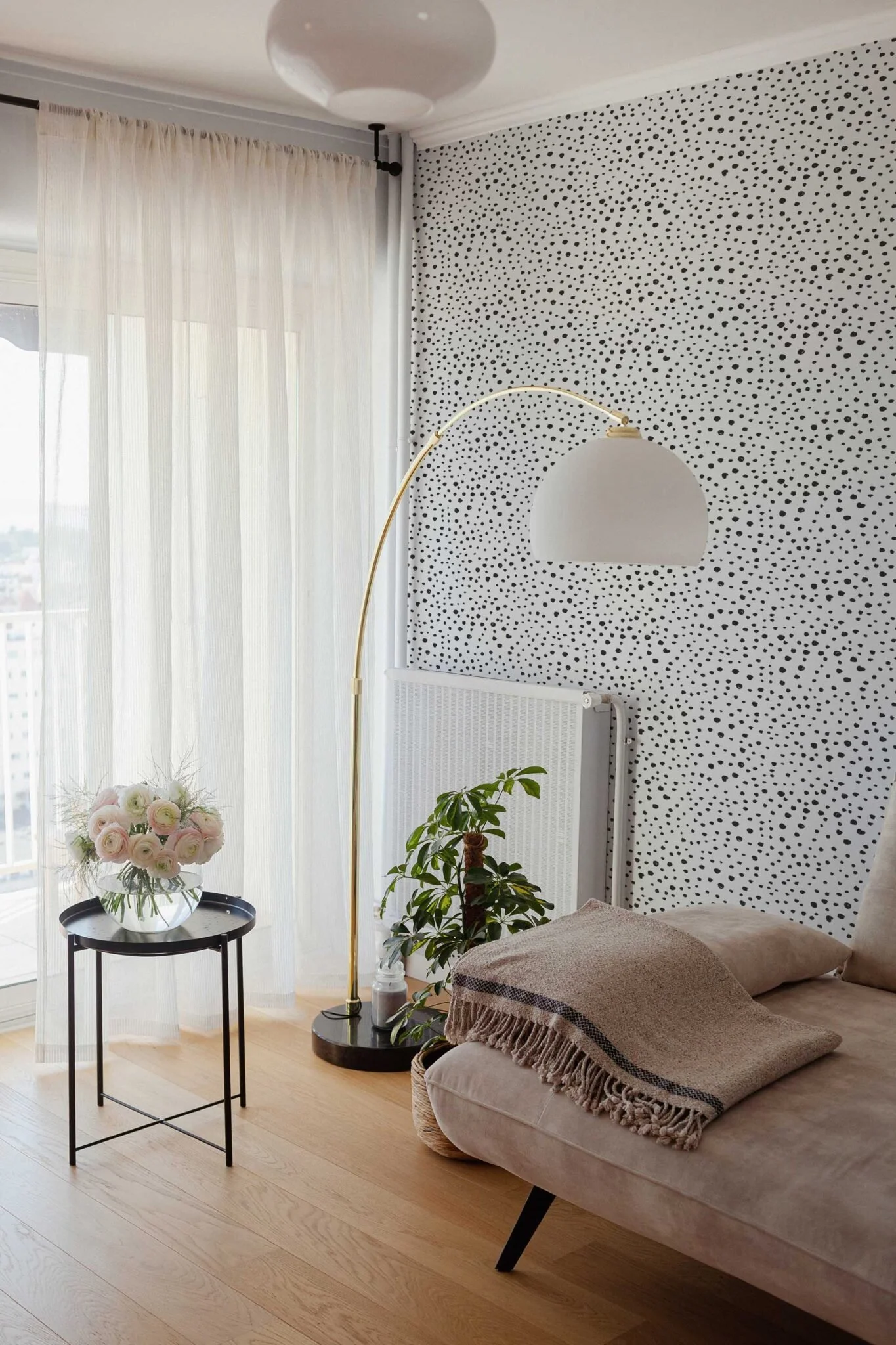
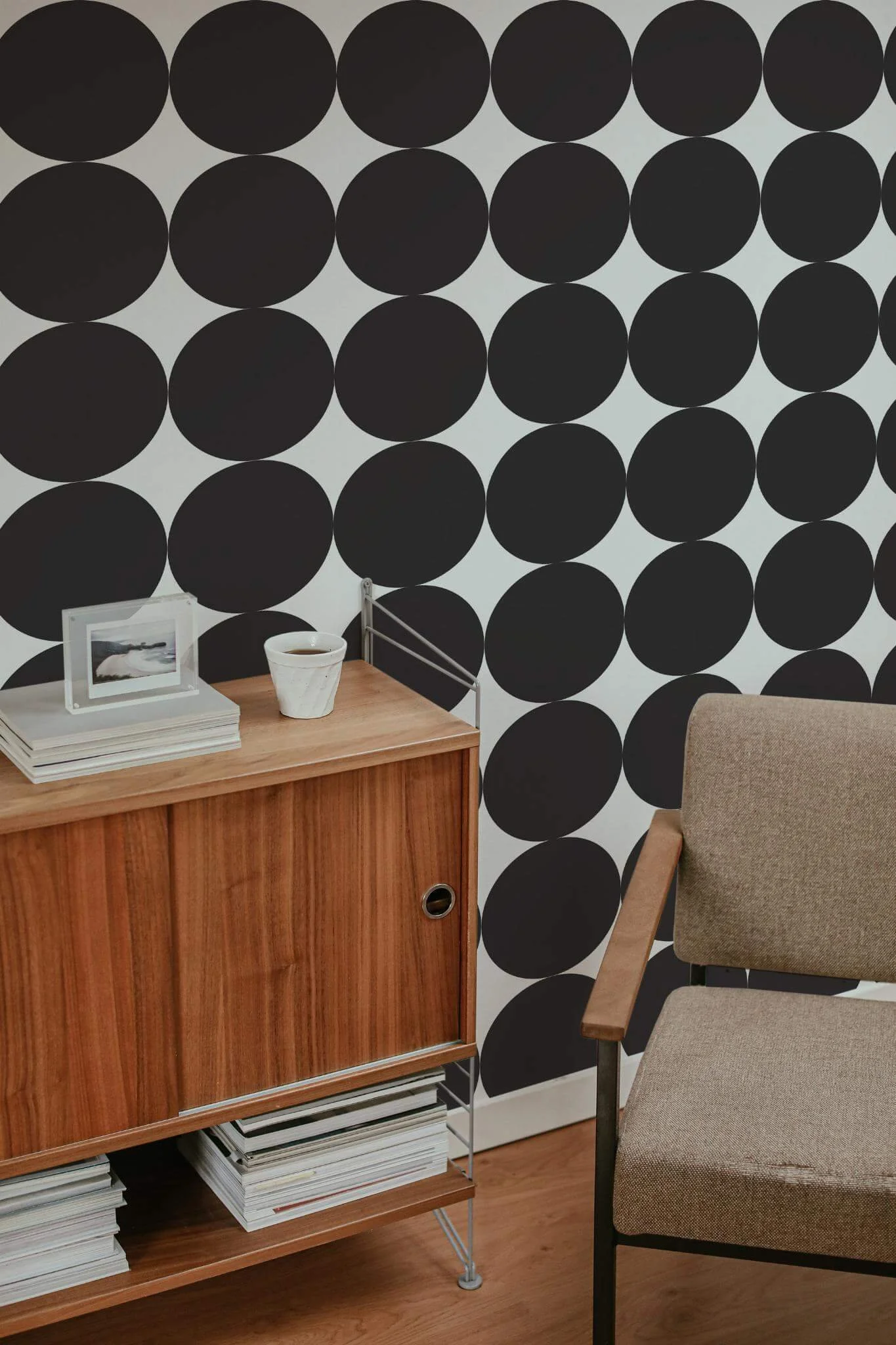
The trend also fits naturally into the rise of pattern drenching and layered interiors. Designers are becoming more comfortable mixing prints, introducing softer forms, and using wallpaper to shape atmosphere rather than simply fill empty walls.
One reason dotted wallpaper continues gaining traction is flexibility. It works in children’s spaces, but also translates easily into powder rooms, kitchens, offices, entryways, and hospitality settings depending on scale and color palette. Neutral palettes keep the look grounded and modern, while higher-contrast versions introduce a stronger graphic edge. Designers interviewed by Ideal Home noted that monochrome or tonal interpretations help the pattern feel more timeless than trend-driven.
For renters and more temporary spaces, peel-and-stick formats have also made experimentation easier. Wallpaper no longer feels like a permanent commitment, which has opened the door for more expressive applications across interiors.
The strongest versions of the trend avoid leaning too nostalgic. Instead, they use repetition, spacing, and softness to create rooms that feel dynamic without becoming visually heavy.
Explore the collection here: Fancy Walls Polka Dot Wallpaper Collection